Boston · July 2025
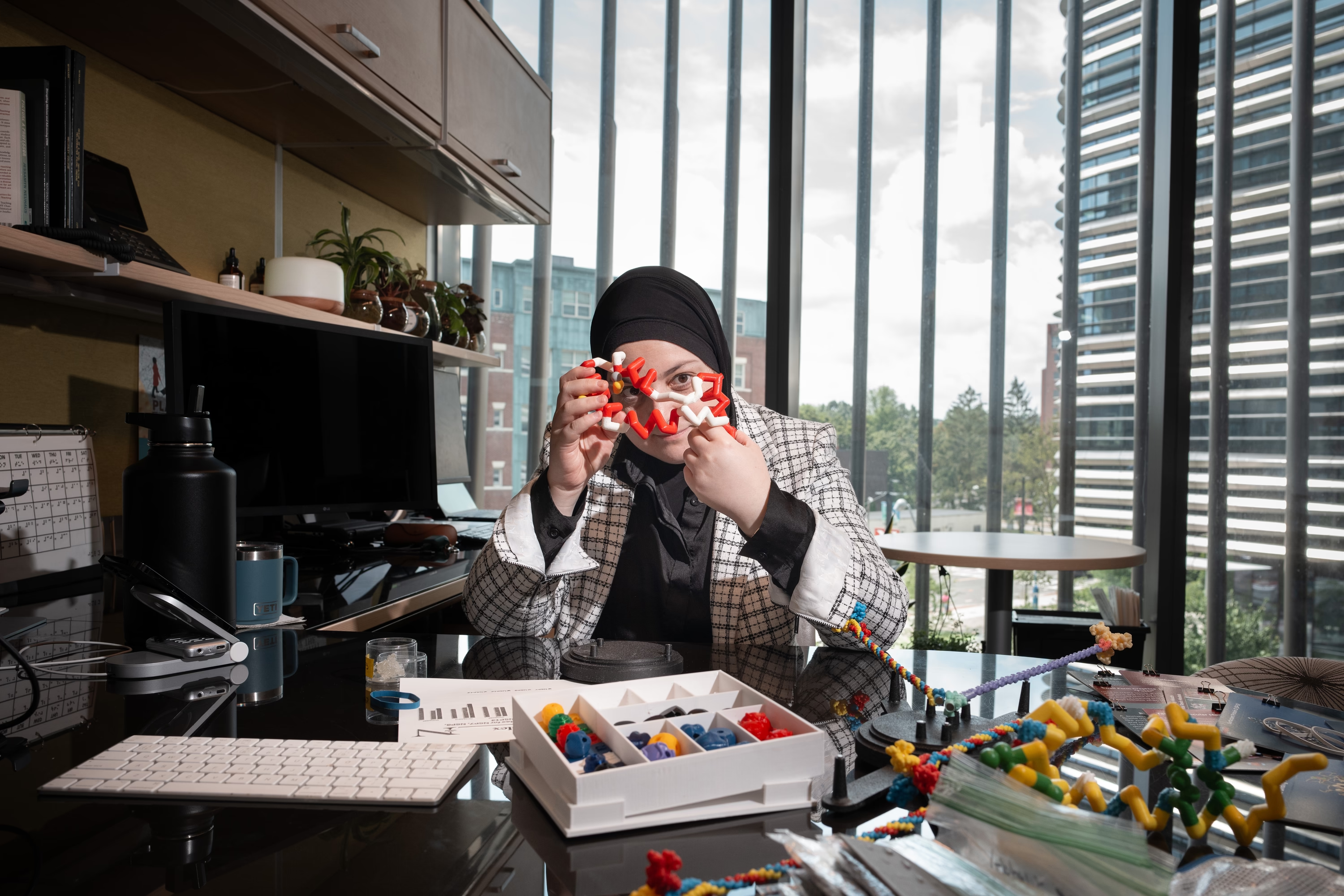
Mona Minkara in the COMBINE Lab
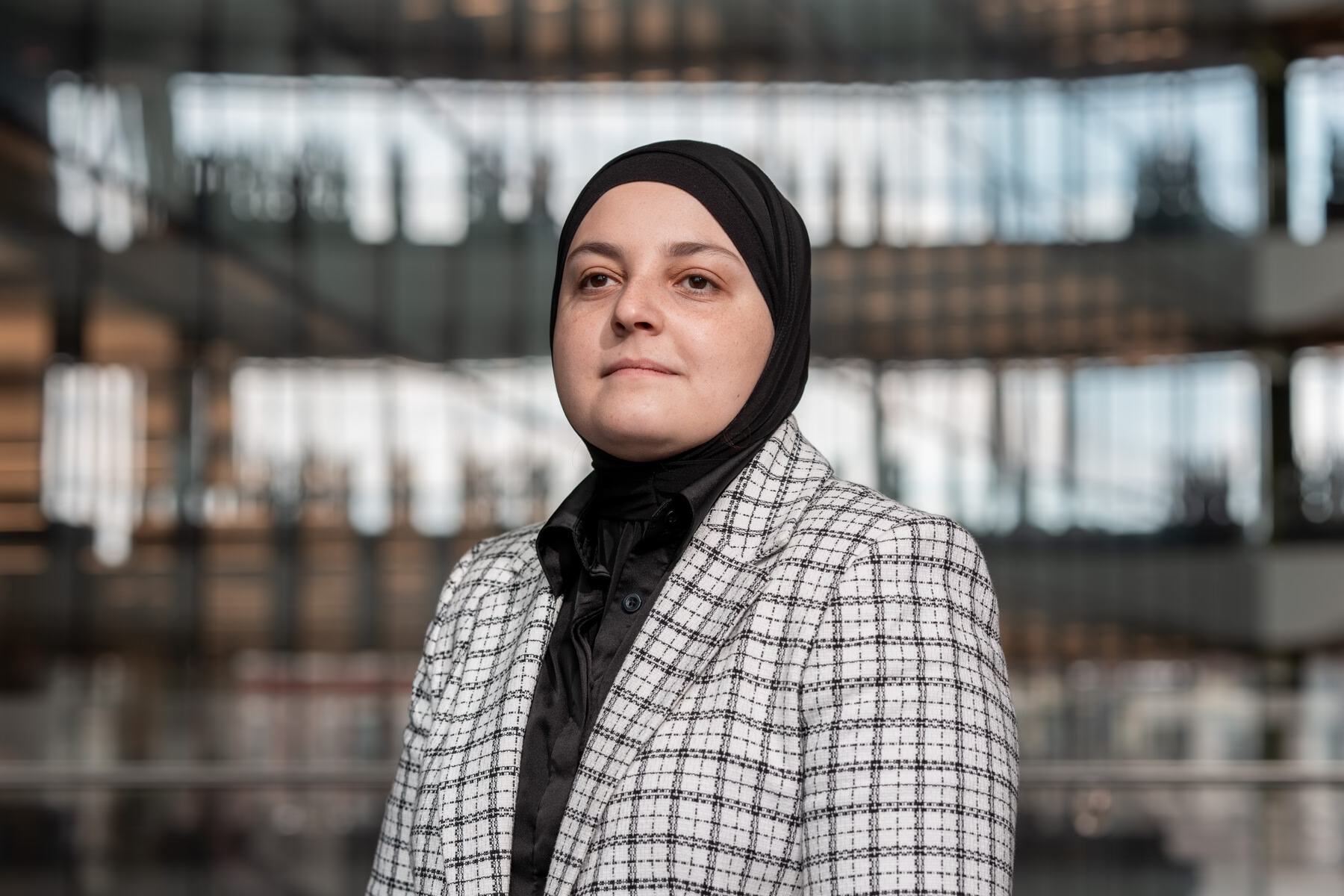
On July 17, 2025, Mona Minkara demonstrated the models and tactile tools she uses at Northeastern University’s COMBINE Lab in Boston. These photographs were commissioned for Chemical & Engineering News’s 2025 Trailblazers issue.
Modelling lung proteins
Every breath brings air into contact with liquid inside the lungs. At that boundary, proteins and lipids make up the pulmonary surfactant system. Minkara, a bioengineer at Northeastern, uses computer simulations to investigate how these molecules behave. Surfactant protein B, represented by the model in her hands, helps organize the lipids involved in breathing mechanics.
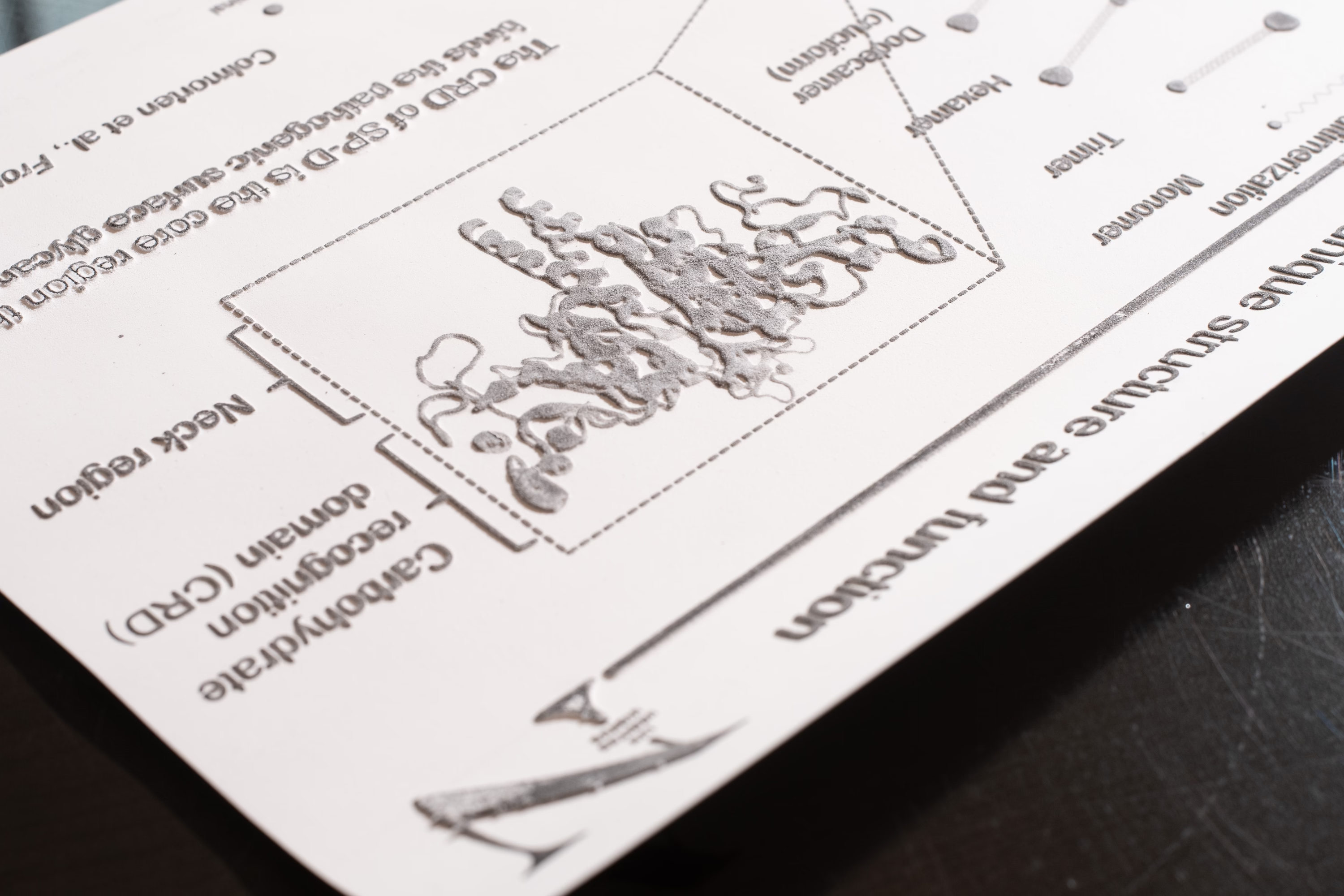
Other surfactant proteins help defend against material entering the lungs. SP-A and SP-D can recognize carbohydrate structures associated with viruses, bacteria and other airborne particles. These structures are called glycans. Closely related glycans can interact differently with a protein, making recognition a chemical question as well as a biological one: what allows a protein to distinguish between them?
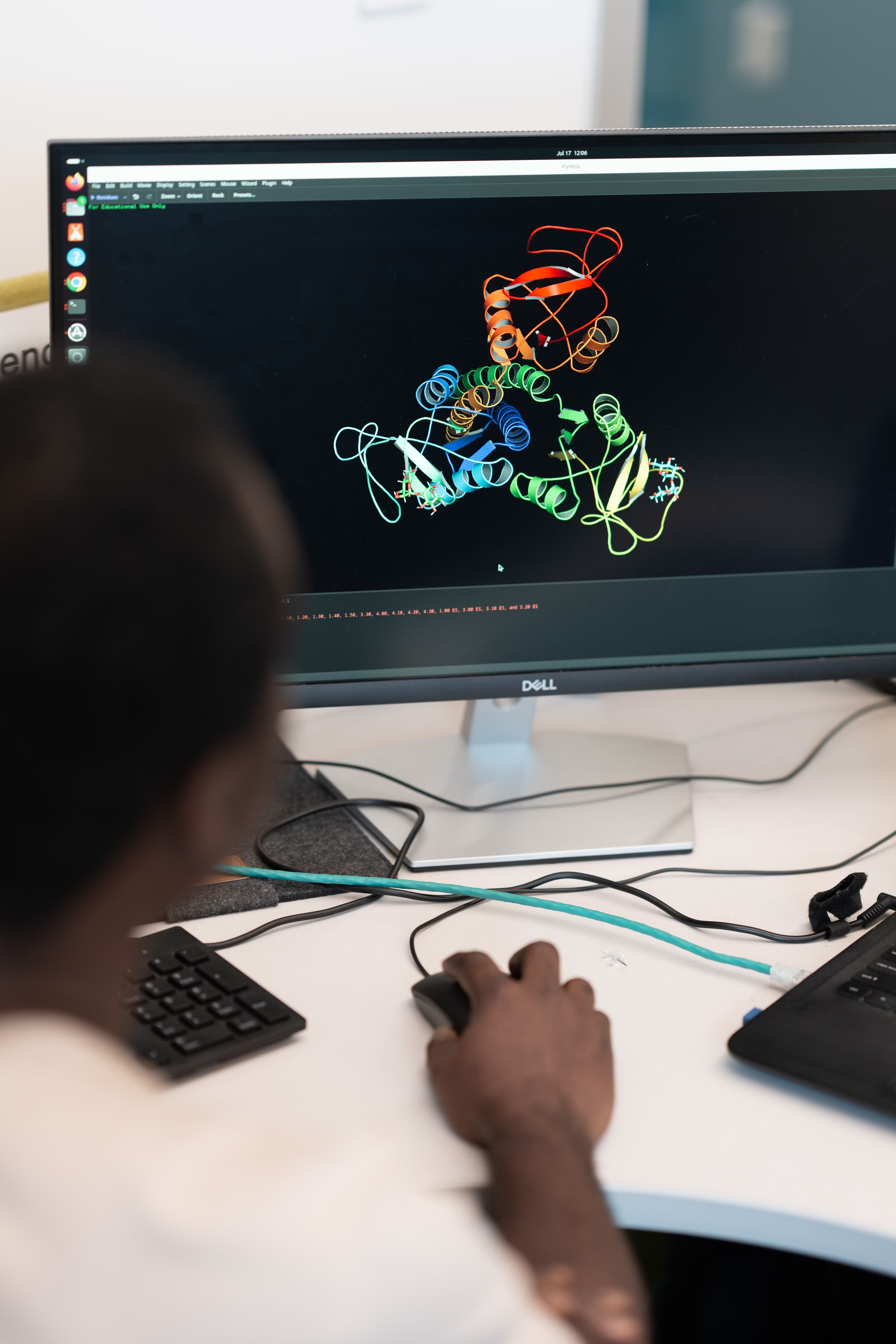
The lab’s research overview describes following molecular movements, testing protein binding and examining the surrounding water as part of that question. Its aim is to understand how these interactions contribute to the lungs’ defenses. Such models can inform future approaches to respiratory health; they describe mechanisms under investigation rather than an established treatment.
Bec Roldan’s C&EN profile describes the group’s simulations of interactions between lung proteins and pathogens, including how mutations in surfactant protein D affect its binding to influenza A.
Tactile data in the COMBINE Lab
In her essay for C&EN, Minkara describes finding her way to Northeastern through changes in pavement, air and sound. Those ways of sensing also inform her science.
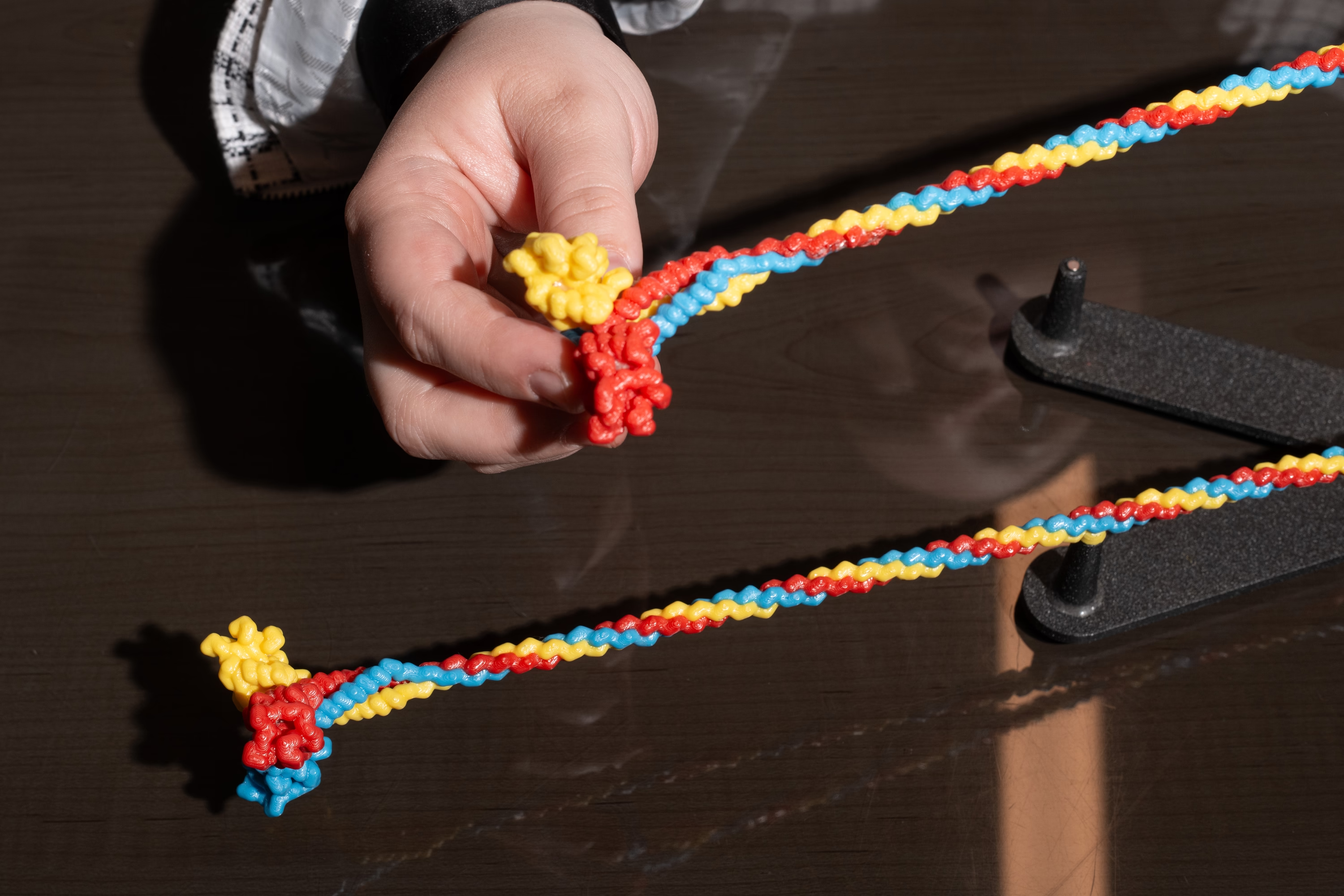
Minkara, who is blind, works with three-dimensional models and tactile representations of scientific information. Raised printing on Swell Form paper and lithophanes that can be explored by touch or viewed with backlighting offer different ways to read diagrams and data.
During her PhD, she used mathematics to track atomic motion in simulations of urease, an enzyme produced by Helicobacter pylori. The analysis revealed patterns that visual inspection had missed. Her postdoctoral adviser later helped her recognize the workaround as innovation.
Her essay argues that tools for touch and sound can expand access while opening new questions for scientists to investigate.
Her methods extend beyond specialized equipment. On her website, Minkara describes an assistant drawing chemical structures in hot glue. Once it dries, the raised lines can be read by touch. For larger structures, she has used Play-Doh and pipe cleaners. These adaptable materials let her explore shapes and patterns that are too complex for a conventional molecular modeling kit.
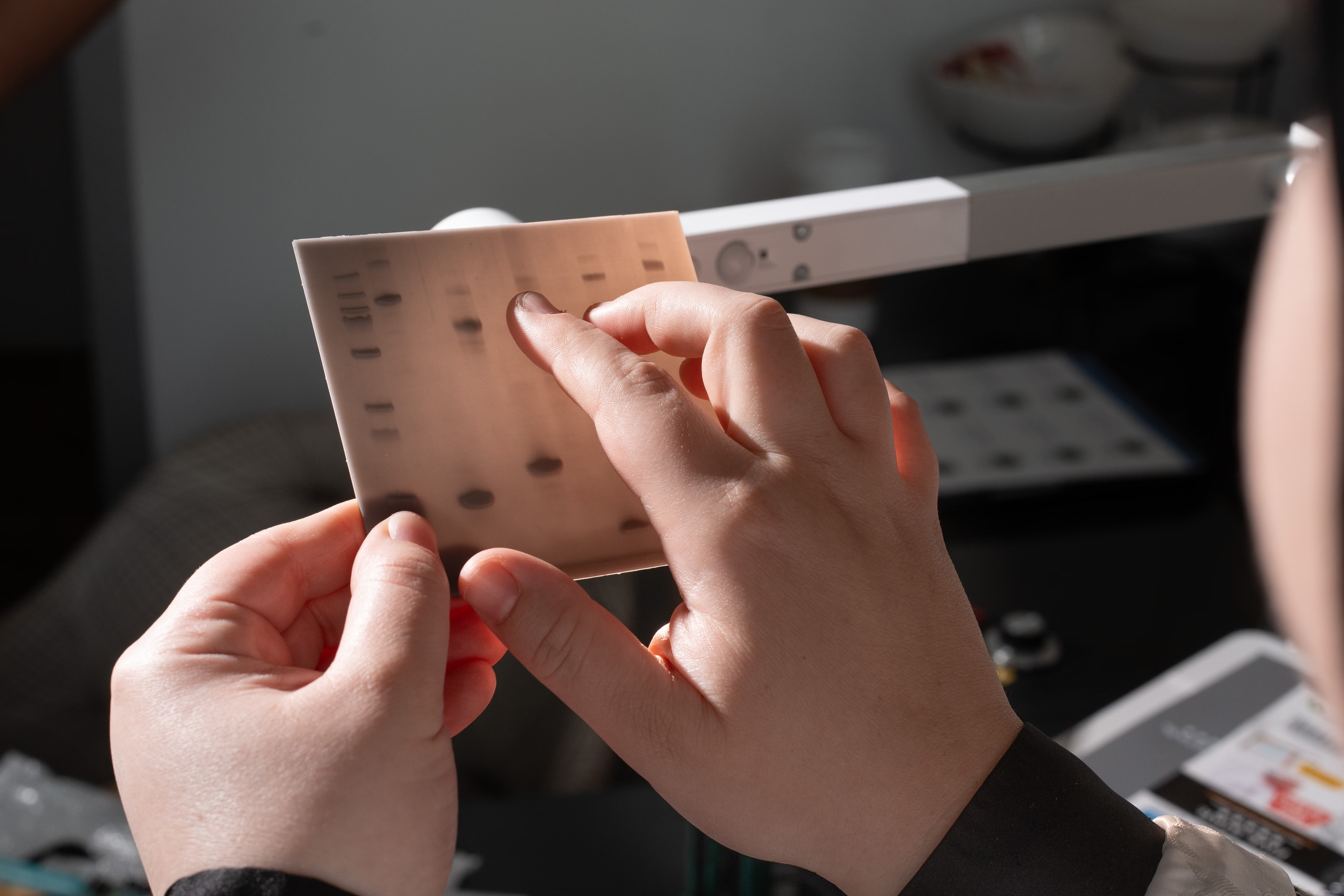
Interpretation also depends on precise conversation. In her guide to learning new concepts, Minkara describes asking an access assistant for an overall account of a result, then narrowing her questions as she develops a hypothesis. Each answer helps determine what to examine next. The exchange follows the work of analysis: describing the information, identifying a possible explanation, and asking what would support, contradict or change it. The scientific judgment remains hers.
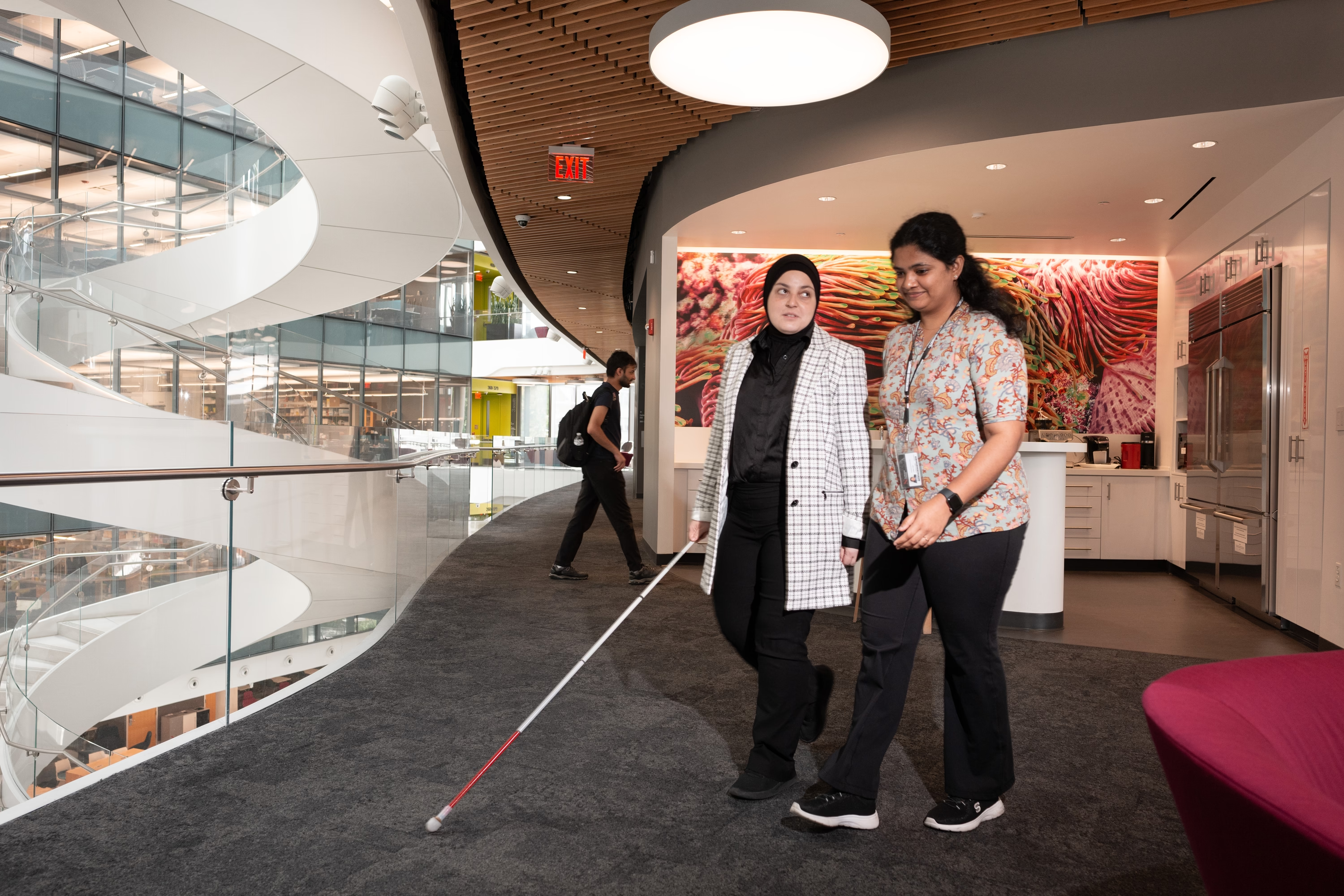
Roldan also recounts Minkara’s first experience teaching an optional chemistry recitation at the University of Florida. Attendance grew from 14 students to 50 over the semester. That experience helped her imagine becoming a professor.
The tools have also reached students outside her university. An NIH account of a 2022 chemistry program describes a collaboration between Baylor University and the Texas School for the Blind and Visually Impaired. Minkara served as a co-leader and one of three blind chemist mentors. Eight high school students explored tactile scientific graphics before spending two days at Baylor. There, they could feel parts of an electron microscope, examine tactile versions of its images, handle models of protein structures and learn about compounds responsible for familiar scents.
Her advice to academic mentors joins practical preparation with equal expectations. Arrange access assistants and suitable hardware before a student arrives, she recommends, and hold that student to the same academic standards as peers. Providing the tools and expecting rigorous work belong together.
Read the C&EN stories
The tools we build become the questions we ask — Mona Minkara, C&EN, September 15, 2025.
Mona Minkara uncovers patterns in how our lungs interact with airborne viruses — Bec Roldan, C&EN, September 15, 2025.