Cairo · 2012
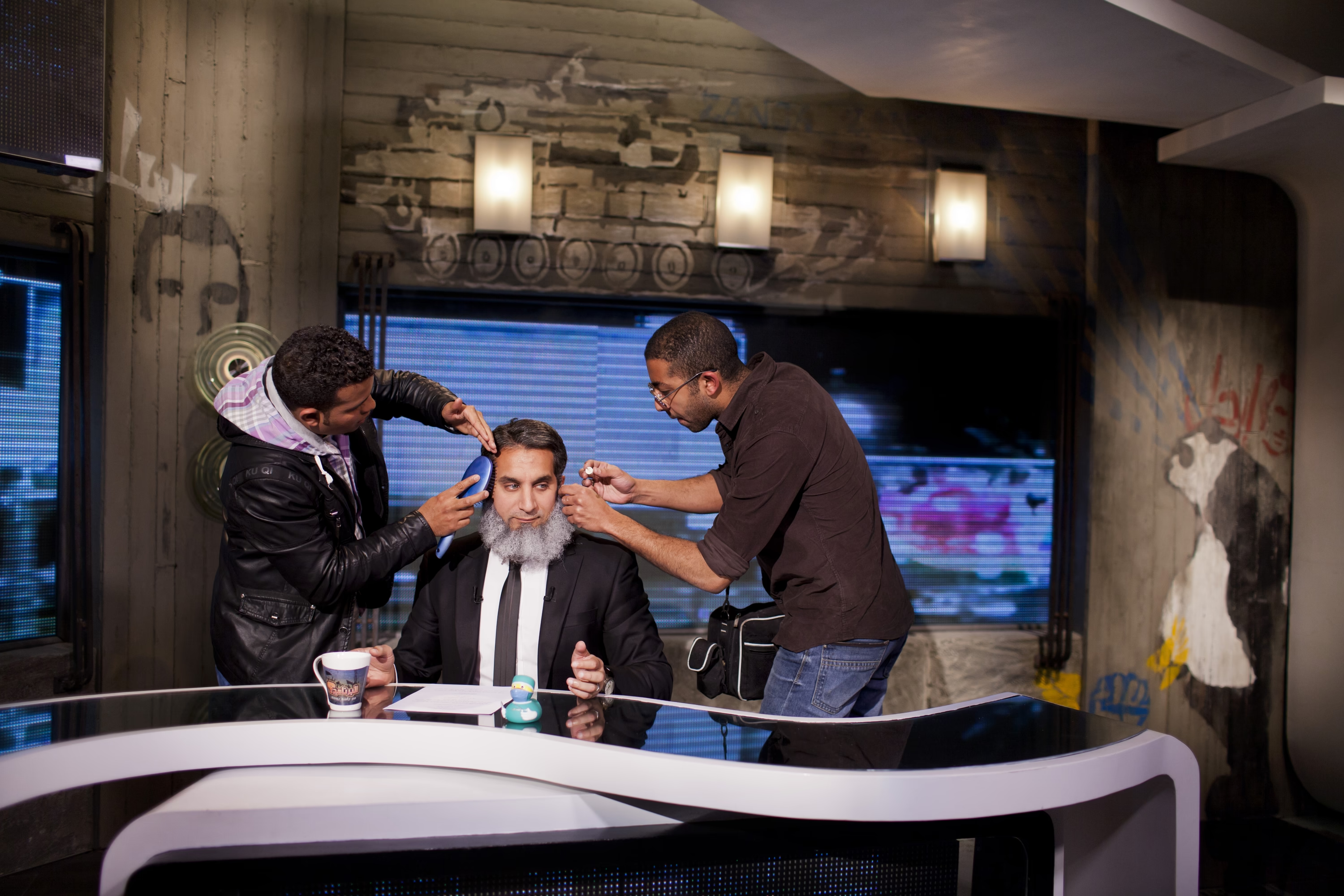
Bassem Youssef: Behind the Satire
While living in Egypt, I photographed Bassem Youssef for Bloomberg Businessweek’s profile of “Egypt’s Jon Stewart”, working with writer Willem Marx. Picture editor Diana Suryakusuma commissioned the March 2012 assignment, with Getty Images coordinating the arrangements.
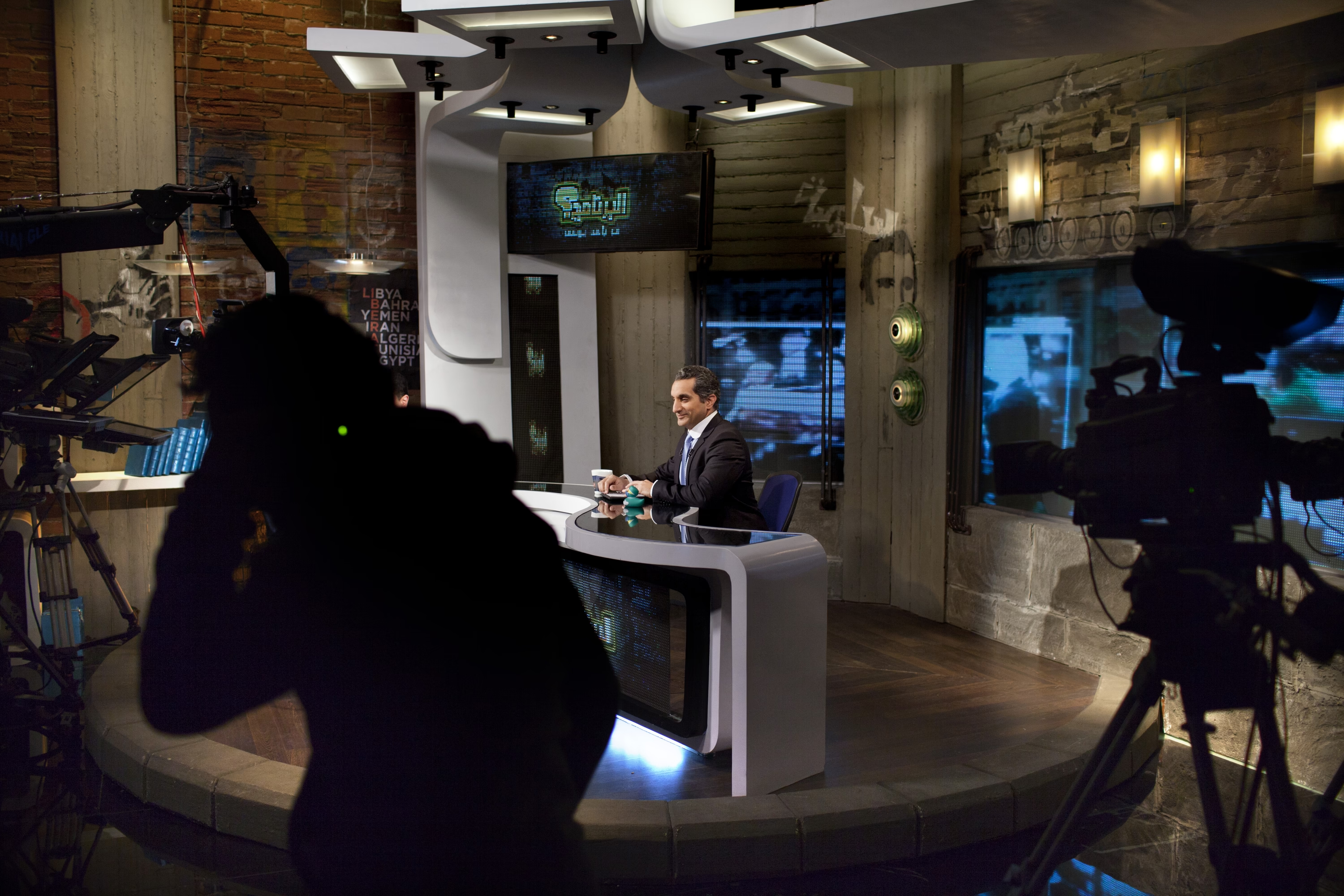
I remember driving out to the television production city in 6th of October, far outside Cairo. Getting through security took some time, but it was worth it to watch the team create one of the most popular shows to emerge from the revolution.
Playing the powerful
By the time I photographed Bassem in March 2012, he had gone from working as a cardiothoracic surgeon to hosting Al Bernameg—“The Program”—on ONTV. He had started with The B+ Show, posting comedy online in response to the 2011 revolution. Jon Stewart’s The Daily Show was his inspiration.
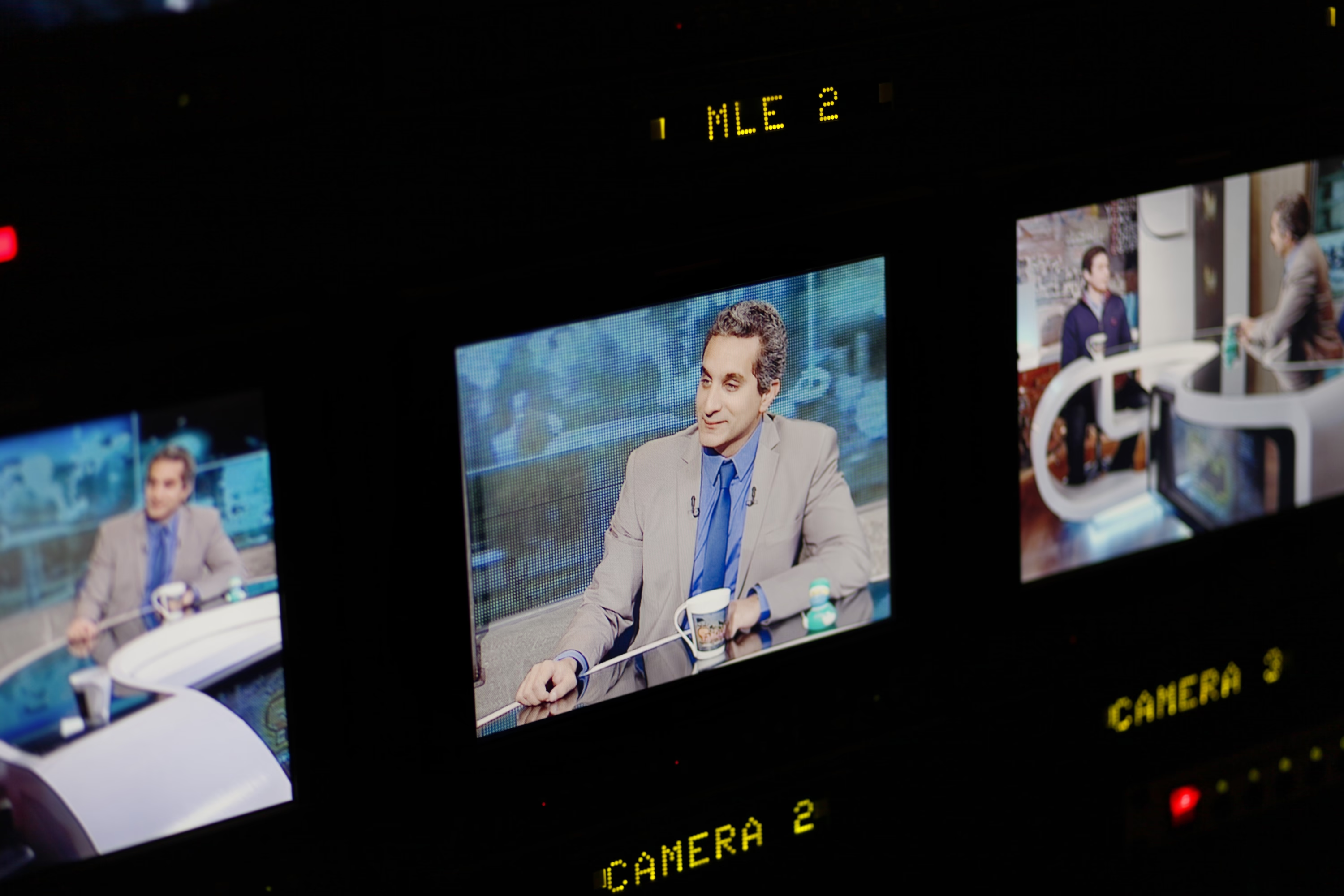
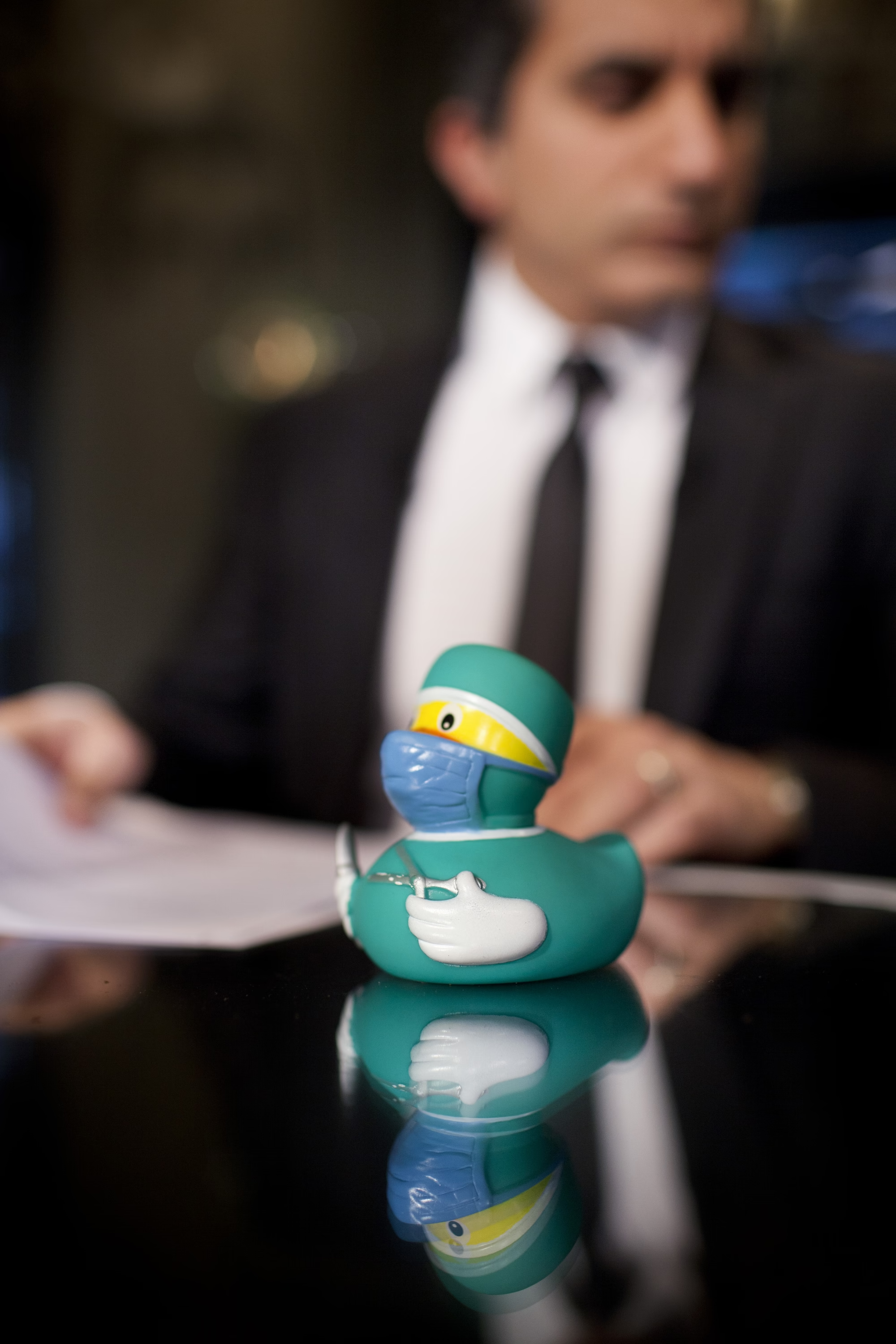
At the studio, I photographed the work behind his political impersonations. Makeup specialists gave him the beard of Hazem Salah Abu Ismail, the bald cap and glasses of Mohamed ElBaradei, and the appearance of Mohammed Salim Al-Awa. I could photograph the transformations as well as the performance: hands adjusting a beard, a brush at his shoulder, and the crew waiting behind the cameras.
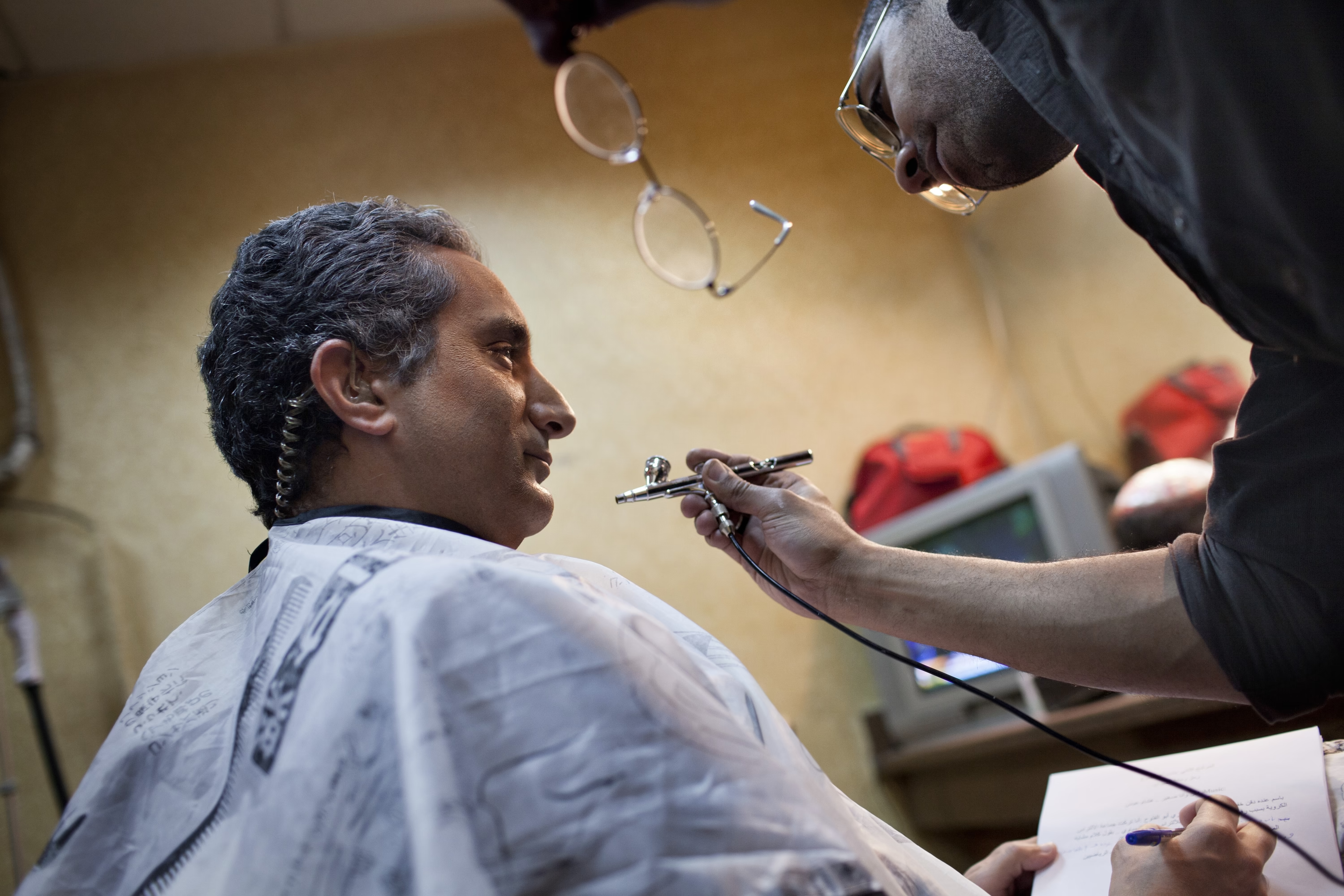
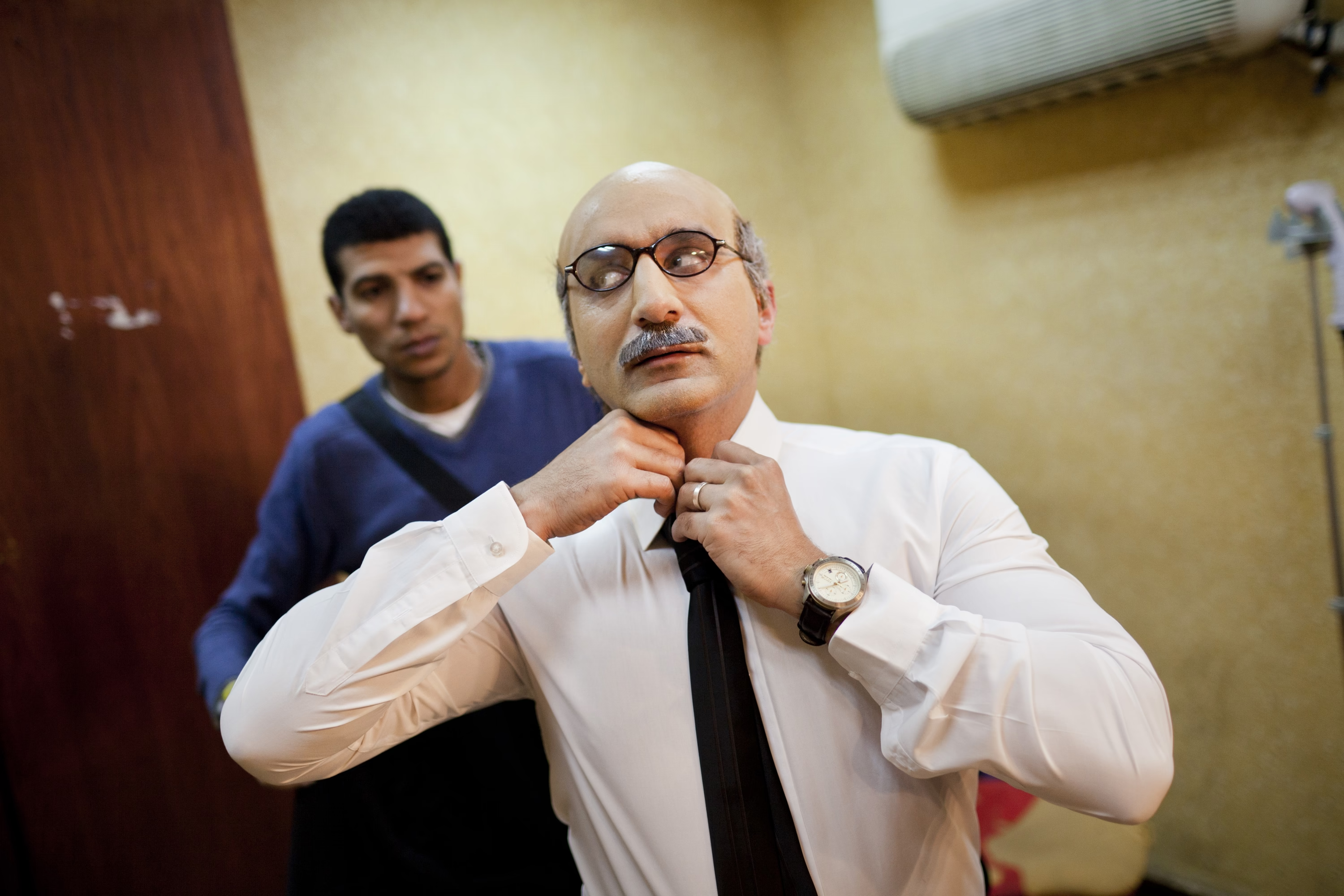
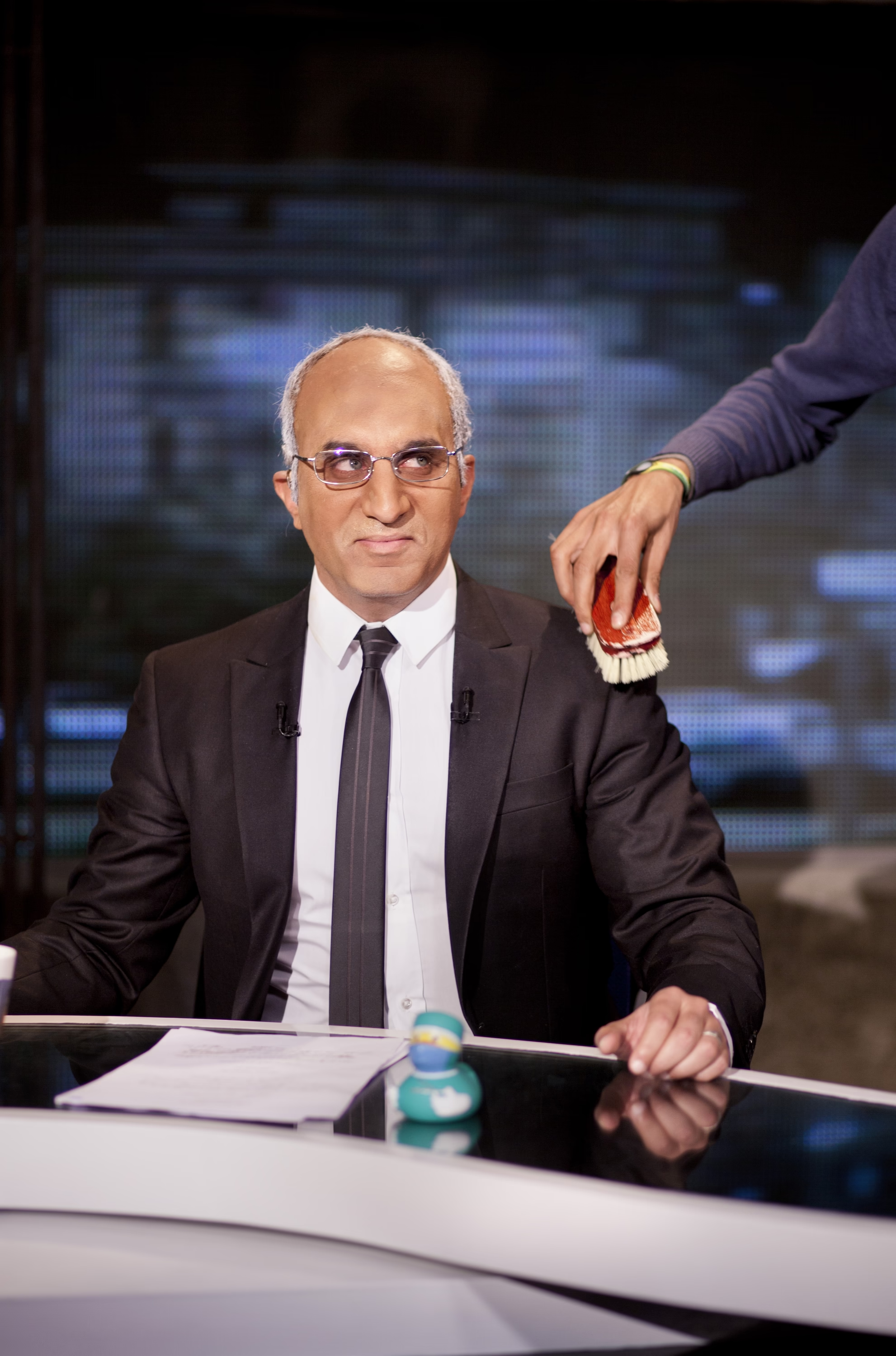
Bassem was nice enough to give us a ride back into Cairo. We finally had a chance to talk, and I asked him about a child I had met in Libya who had elephantiasis. I was asking him as a doctor; before television, he had trained and worked as a heart surgeon.
Before the cameras
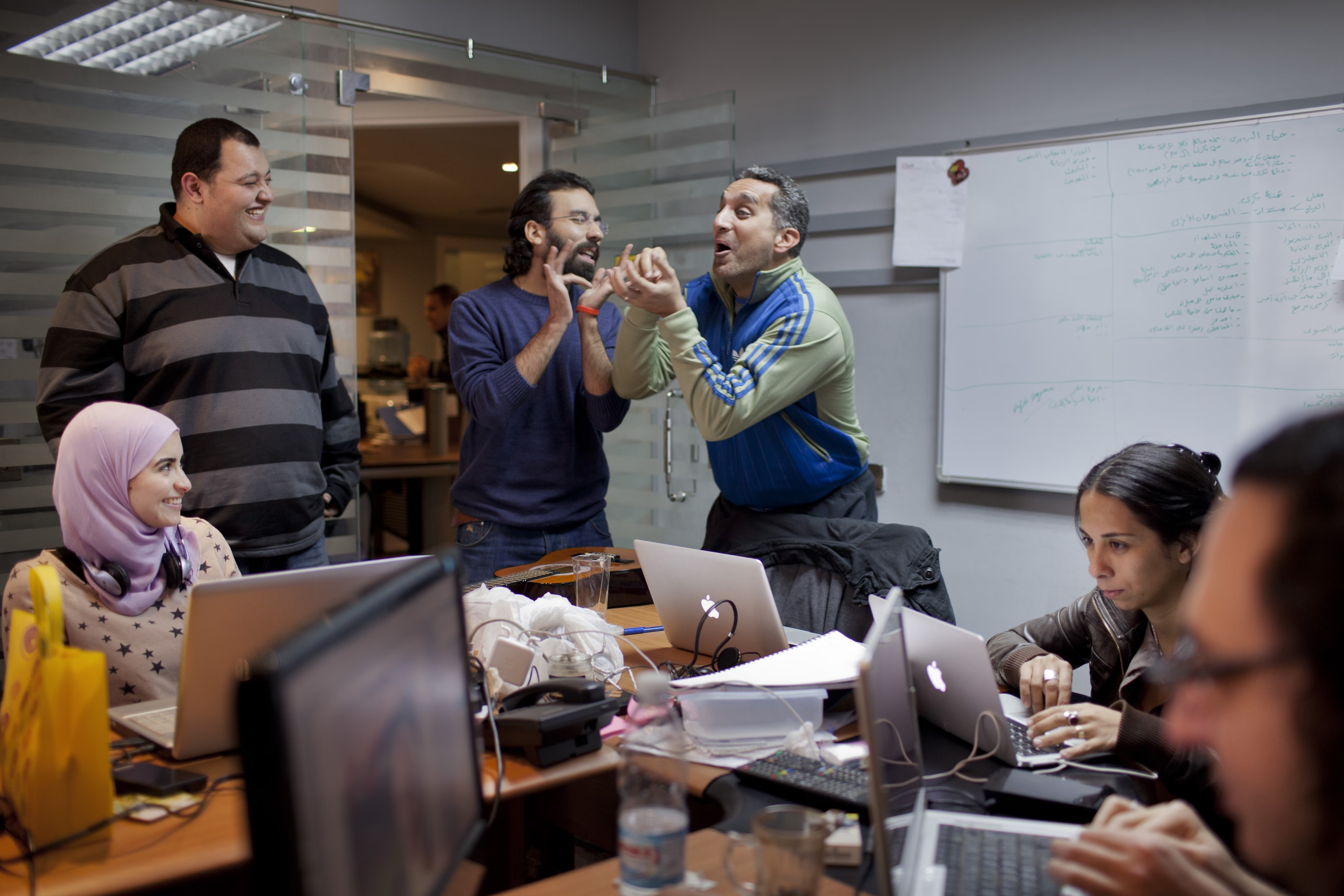
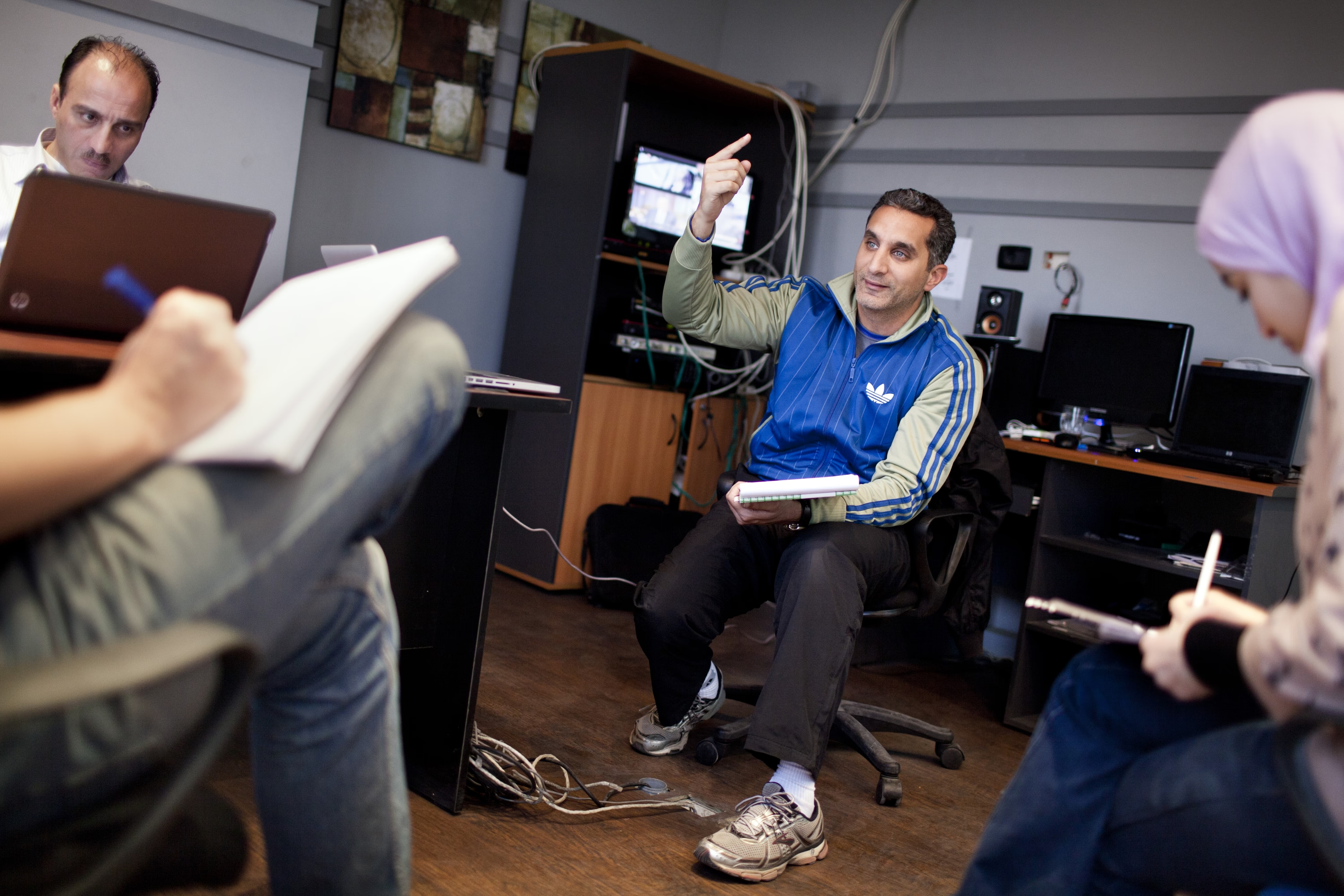
After the studio shoot, I asked Diana if I could spend more time with Bassem and photograph the research and writing. She agreed, and on March 5 I photographed the team in its Mohandaseen office. I watched them follow television news, Facebook memes and Twitter discussions, then try out ideas around a table of laptops. The performance I had photographed at the studio began here.
I returned on October 4 for a new assignment from Daniel Di Paolo, an art director at Ink, for Abu Dhabi Airport’s magazine. Journalist Alastair Beach helped arrange access. This time, getting there was much easier: Bassem and his team were working in an apartment in Zamalek.
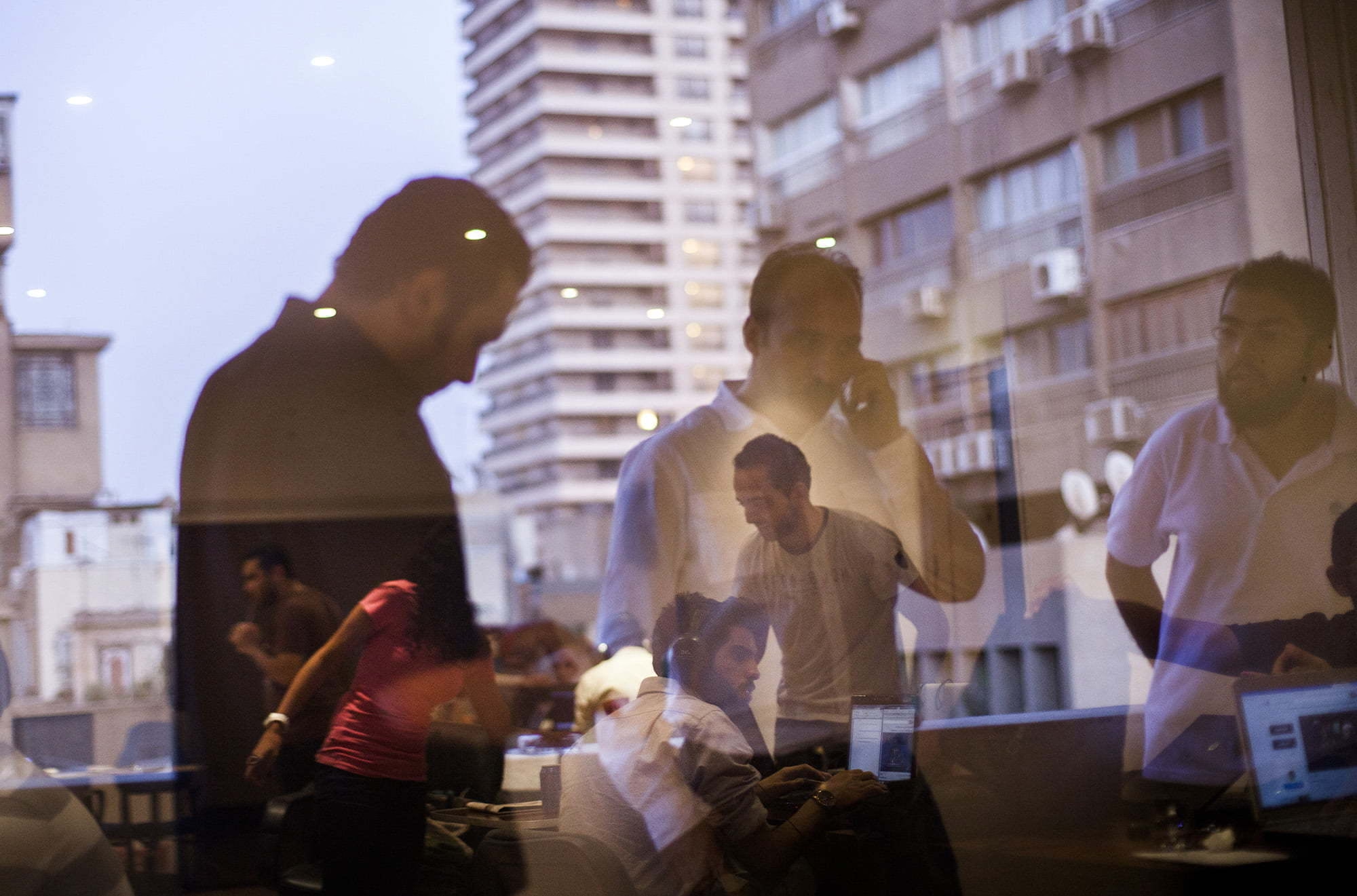
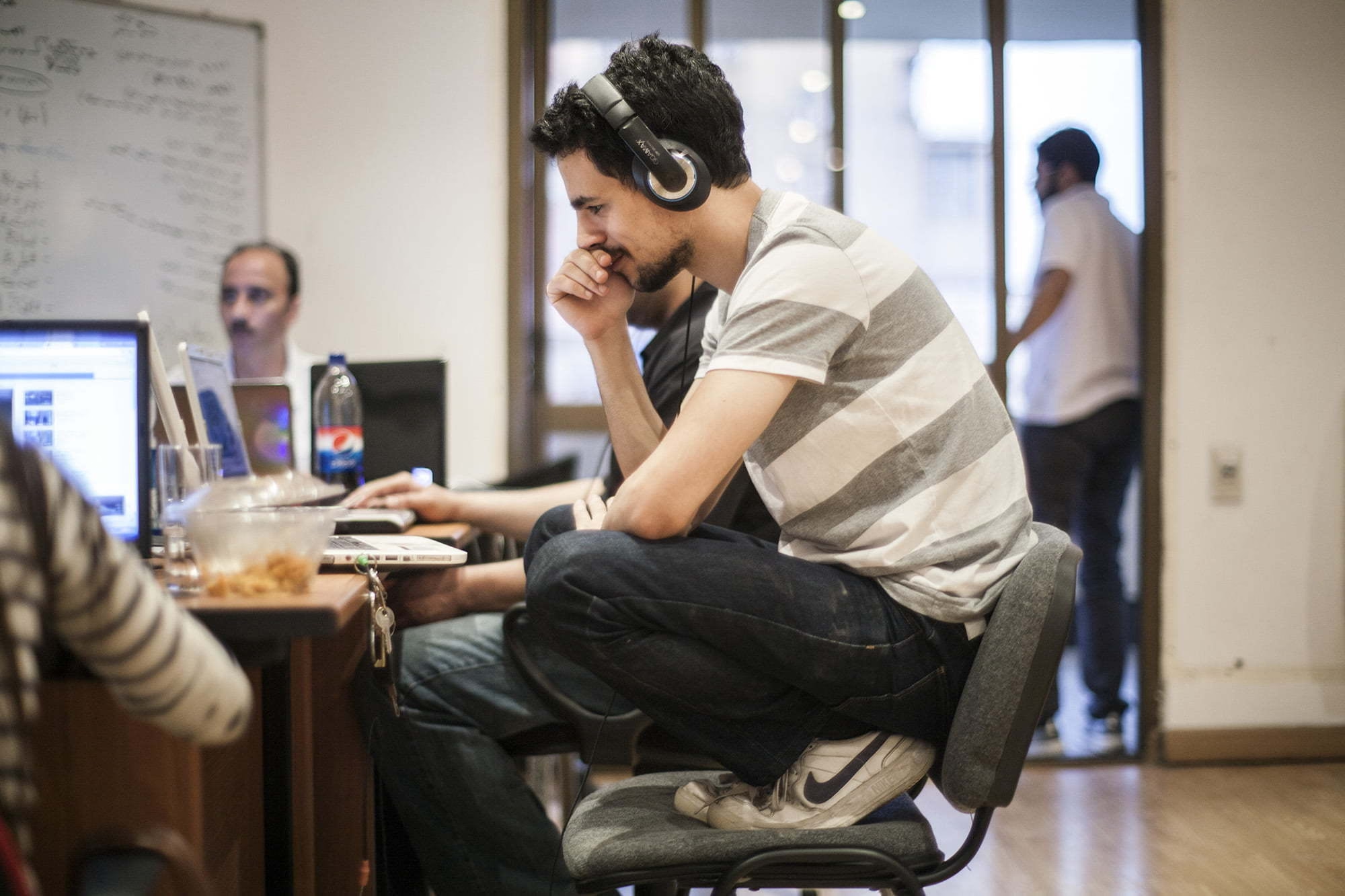
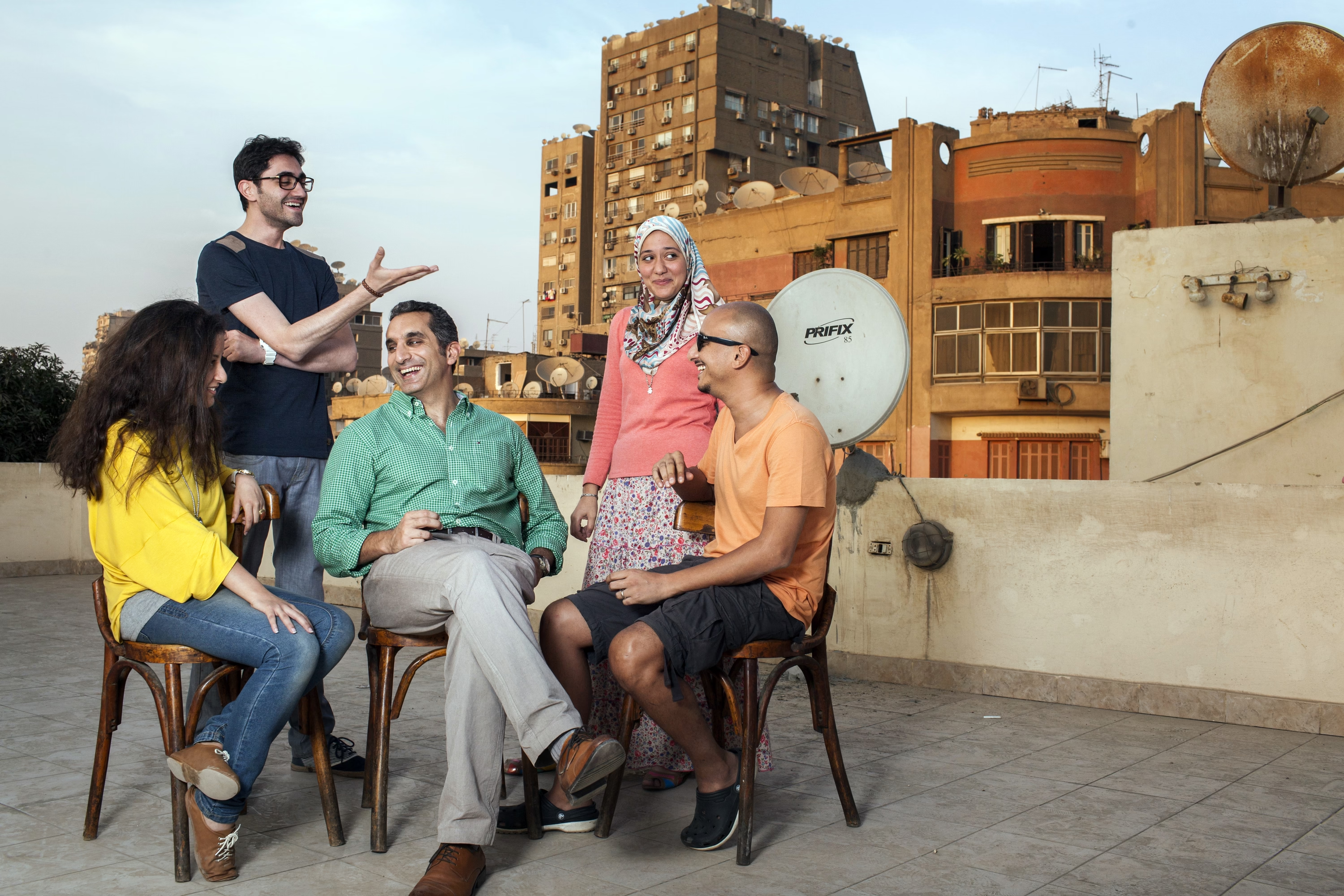
I remember the apartment being full of young energy as they created the show everyone would be watching. I photographed researchers reviewing and time-coding television footage, looking for material for the next season. There were about thirty people working on the research, and I made a group portrait with Bassem and some of the team on the roof.
I was photographing preparations for a bigger stage. That November, Al Bernameg moved to CBC and began recording before a live audience at Cairo’s Radio Theatre. My studio photographs later illustrated Lee Smith’s account of Bassem’s rise in Tablet.
After Al Bernameg
My photographs from those visits later accompanied Patrick Kingsley’s March 2013 interview with Bassem. Later that month, Bassem was briefly detained and released on bail over allegations that included insulting President Mohamed Morsi and Islam. By June, my photographs illustrated Benjamin Barthe’s profile as the pressure around the show continued.
In June 2014, one of my photographs accompanied The Guardian’s report that Al Bernameg was ending. Bassem said the climate in Egypt no longer allowed him to continue safely. I had photographed the people and work behind the show only two years earlier.
As I look back at these photographs in September 2026, Bassem is based in Los Angeles, working as a stand-up comedian and actor and touring in English with Belly of the Beast. My photographs hold an earlier part of that history: Bassem in Cairo, surrounded by the young team helping him turn the news into a show.