Cairo, 2013
Mahraganat: Who’s Your Local Musician?
In 2012 and 2013 I went looking for the singers behind mahraganat, the electronic wedding music of Cairo’s informal neighborhoods. Each one passed me to the next.
Mahraganat means “festivals.” By 2013 the music was everywhere in Cairo, coming out of phones and out of speakers bolted onto tuk-tuks and scooters. I had lived in the middle of it for a few years before I understood what it was, and how it spread without stores, labels or any official channel.
I had friends in Egypt’s music business, and the more official musicians among them looked down on mahraganat singers, who weren’t allowed into the musicians’ union and often weren’t allowed on the radio. So I went out to find them. Often that meant walking through a neighborhood and asking, “Who’s your local musician?” One person passed me to another, then another, until I found a singer, usually one who worked weekends at weddings, hyping up the crowd.
Sometimes the trail led higher, to the bigger names who were moving into films, acting and celebrity.
Half of Egypt’s 85 million people were under 25, Martina Kix wrote in NEON, and the musical alternatives were the classic songs of Umm Kulthum, who died in 1975, and Mohamed Mounir. Rather than turn to American pop, she wrote, young Egyptians were making something of their own. As she put it, “With mahraganat, the rebellion is in the sound, not in the lyrics.”
A mixing session and the metro: 3rd Street


A wedding staged by Sardina and Salsa
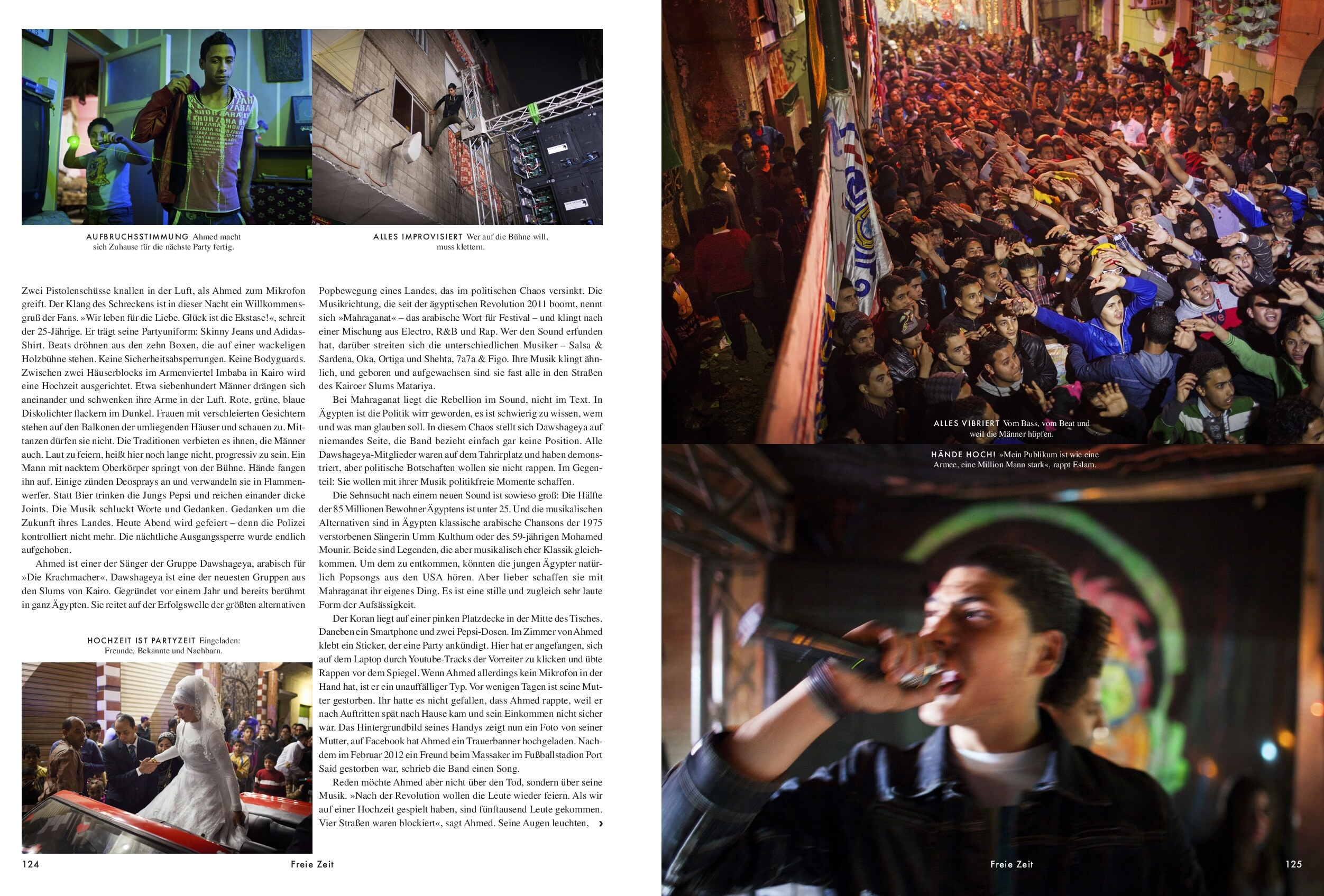
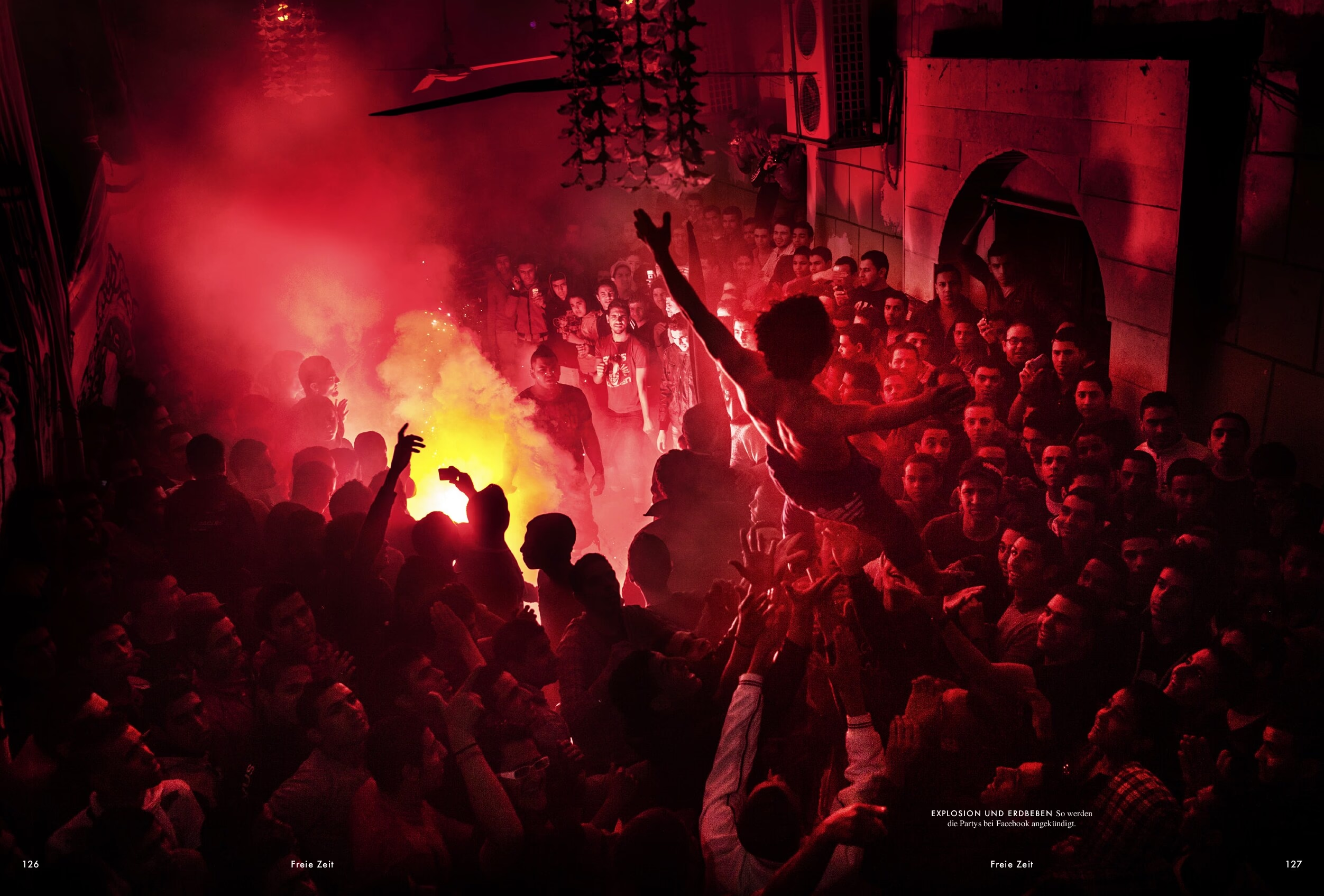
Sardina and Salsa ran a business that staged many of the weddings in Matareya, one of the neighborhoods where mahraganat began. The biggest party I photographed was theirs, on March 4, 2013.
NEON called Sardina one of the fathers of mahraganat. “The guys learned everything from me,” he told Kix. In March 2011 he uploaded “Mahrajan Baheyya” to YouTube. He told Kix it became a kind of soundtrack for the protesters in Tahrir Square; I spent a lot of time in the square and don’t remember hearing it.


“We get requests to play at weddings every day.”
— Ahmed Karika of Dawshageya, to NEON (translated)
Dawshageya, the noise makers
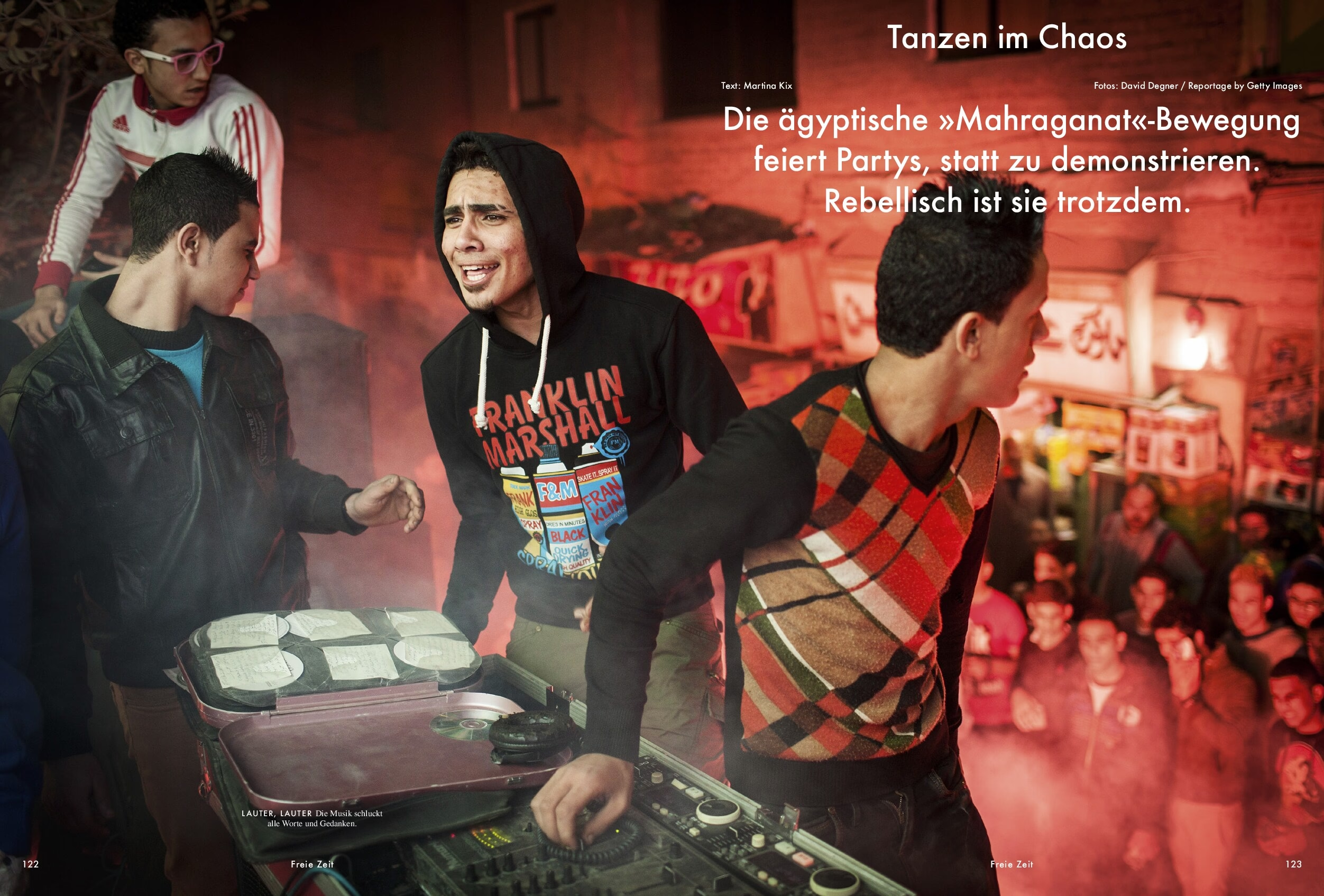
The band I stayed with longest was Dawshageya, from Matareya. I chose them, as I wrote at the time, because they were a working band, down in the streets every week plying their trade. They opened up to me and called me whenever something was happening.
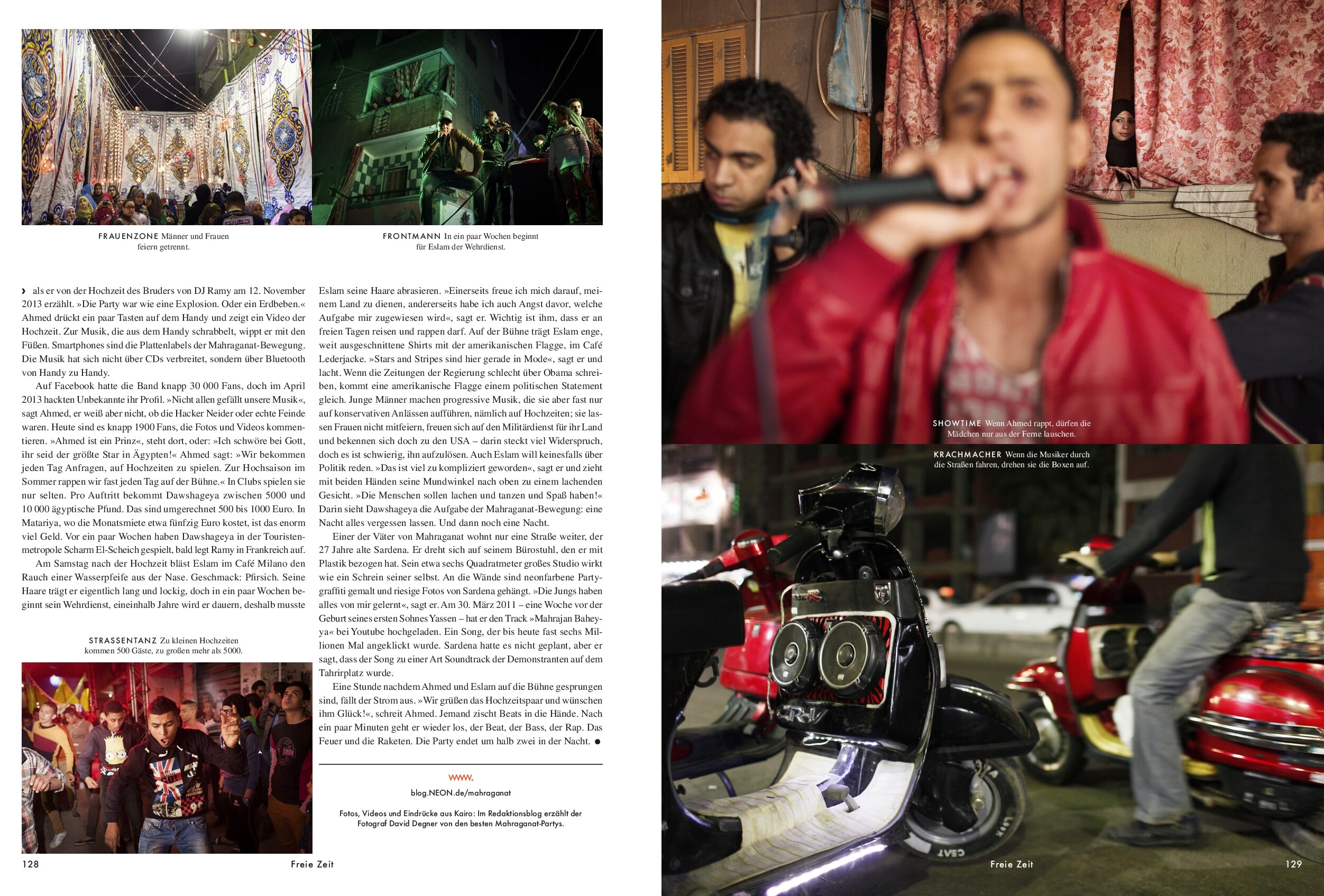
Its singers included Ahmed Karika, known as Khashaba, and Eslam Karika. When Kix reported on the band for NEON in late 2013, it had been together about a year. It was, as I told her then, a middle-famous band. Its members had all demonstrated in Tahrir Square, she wrote, but they did not want to rap political messages; they wanted their music to make moments free of politics. Kix put their fee at 5,000 to 10,000 Egyptian pounds a performance, a fortune in Matareya, where a month’s rent was about 50 euros. In the summer high season, Ahmed told her, they rapped on stage almost every day.
“After the revolution people want to celebrate again,” Ahmed, then 25, told her. “When we played at a wedding, five thousand people came. Four streets were blocked.” Eslam’s long curls were gone: his 18 months of military service were due to start within weeks. Politics, he told her, had become far too complicated. “People should laugh and dance and have fun!” That, Kix wrote, was how Dawshageya saw the task of mahraganat: “to let people forget everything for one night. And then another night.”


Phone to phone
The music didn’t spread on CDs or through stores. Songs moved by Bluetooth from phone to phone, onto Facebook and out of speakers fitted to scooters and tuk-tuks. “Smartphones are the record labels of the mahraganat movement,” Kix wrote. Dawshageya’s Facebook profile had almost 30,000 fans until unknown hackers broke into it in April 2013, Kix reported; when she wrote, it had just under 1,900. “Not everyone likes our music,” Ahmed told her.


8% goes to the movies
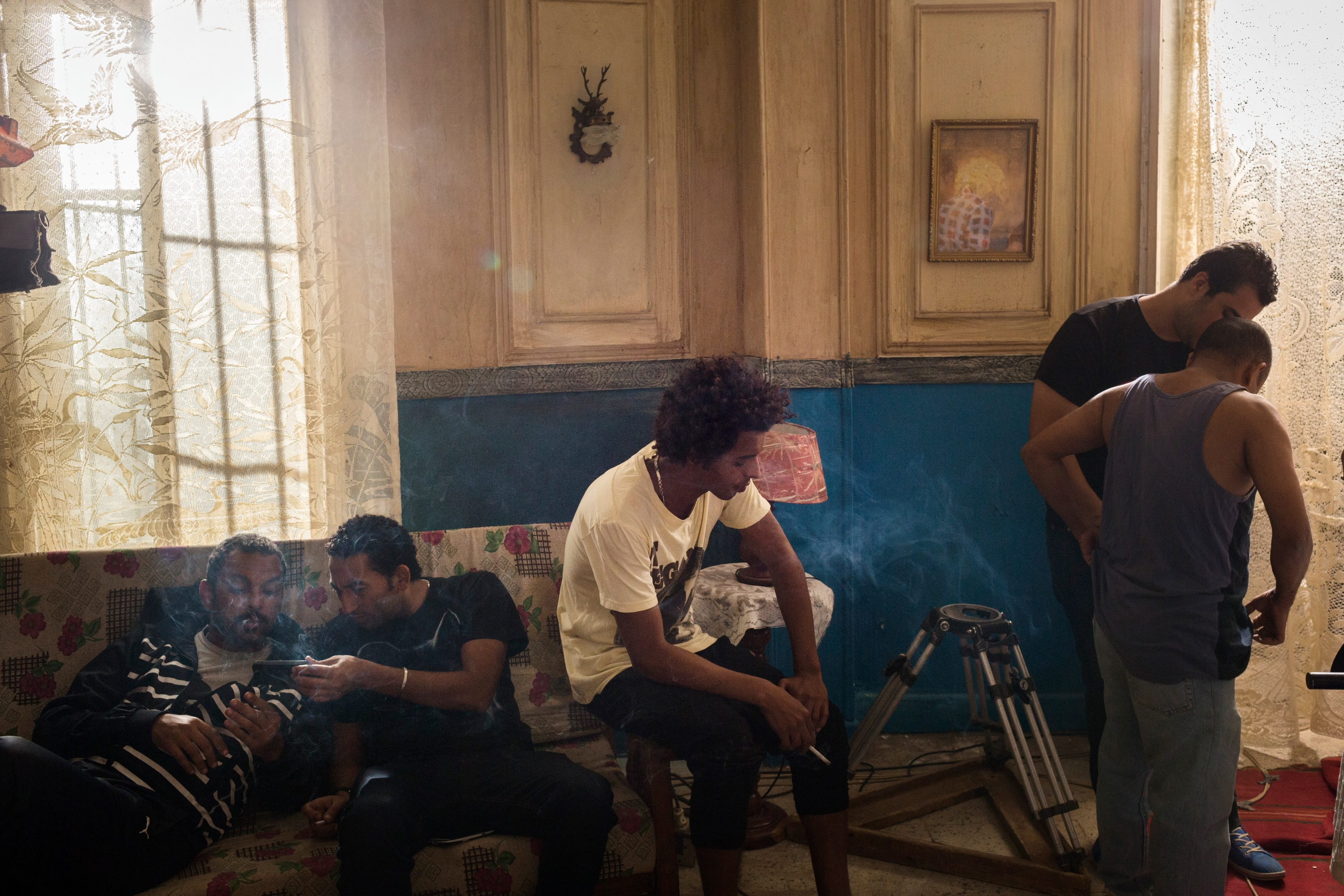
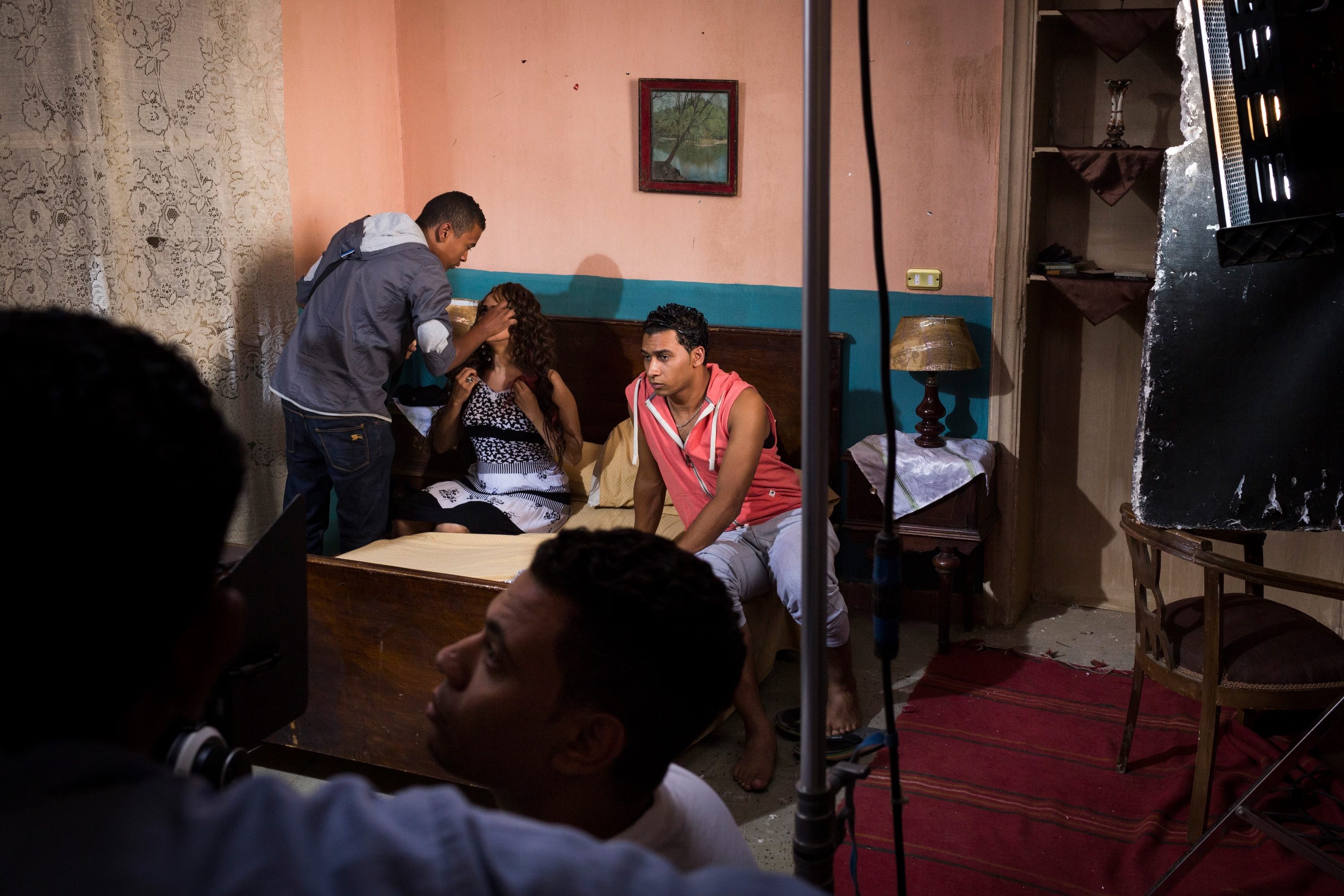
Oka, Ortega and Shehta of 8% (Tamanya Fil Meya) had gone from mixing tracks in a home studio and sharing them on Facebook to having songs reworked into advertisements and being flown to weddings in the Gulf. In October 2013 I got onto the set of their first feature film, 8%, on its last day of shooting, a long day that ran into the night. The film was shot in 13 days to open for Eid al-Adha.


Now, on a hot dog cart in New York
Since I made these photographs, mahraganat has become, truly, the music of Egypt. Official resistance did not stop it: in February 2020 the head of the Musicians Syndicate, Hany Shaker, banned mahraganat singers from performing in festivals, clubs and cafés.
Now I live in New York, and I like walking past the hot dog stands, many of them run by Egyptians, and hearing the latest mahraganat. Often I don’t know the songs anymore. The distribution is so wide on Spotify that official recordings are easy to find.
One night while I was photographing Sardina and Salsa, they asked me to record with them in the studio. A little shout-out from that session, with my voice in it, opens “Ilkan 3al 5atr,” which I posted to SoundCloud in March 2013.
In print
The story ran in the German magazine NEON in its February 2014 issue as “Tanzen im Chaos,” with text by Martina Kix, across eight pages. Getty Images distributed the photographs through Reportage by Getty Images.